

The teachers for Wrens are Mrs Renton and Miss Ward.
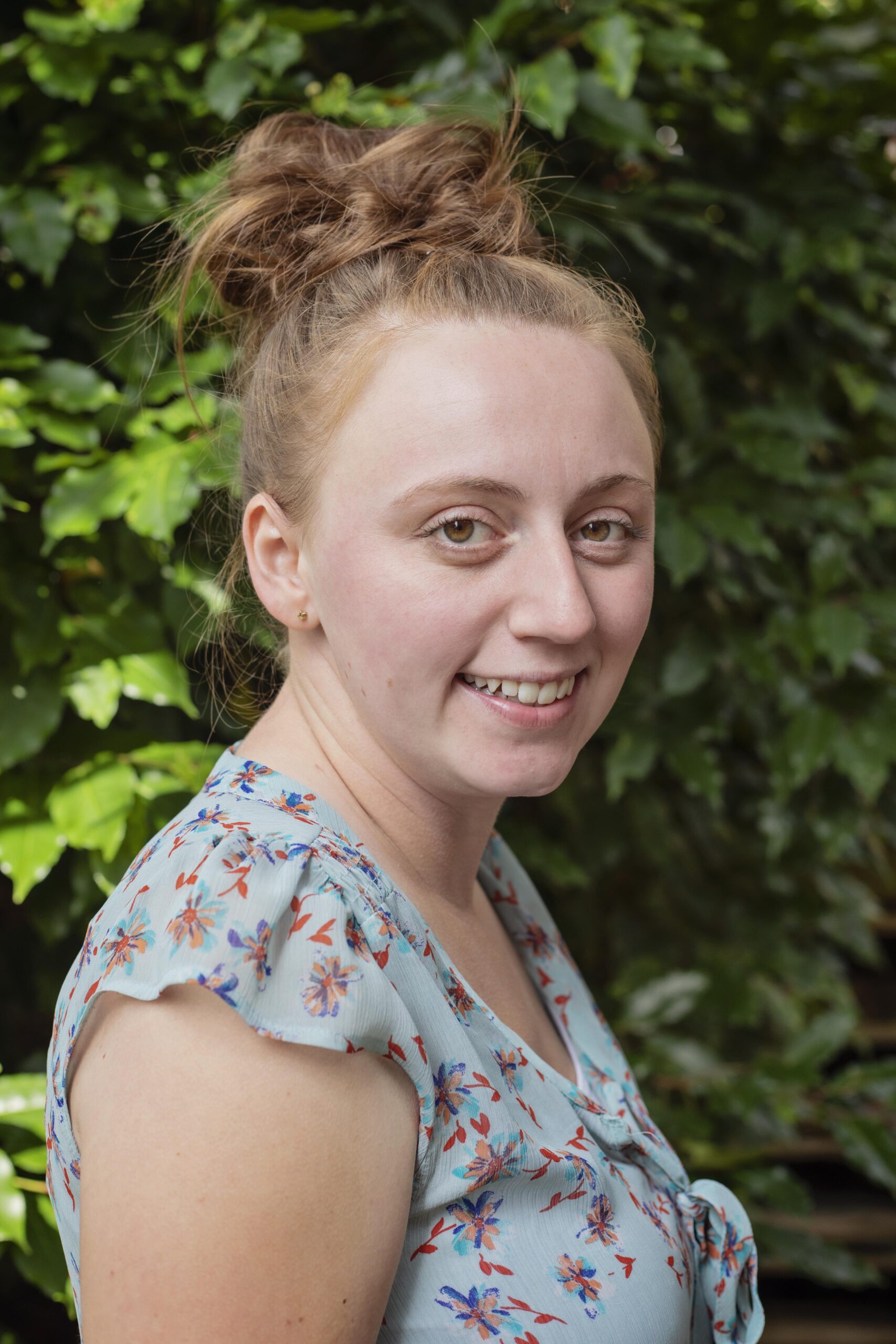

Mrs Renton Miss Ward
Love
Love and a strong sense of belonging are the foundation of our school community’s life. We want everyone to know and feel they are nurtured, precious, unique and loved by God.
Learn
Children should be inspired to develop a lifelong love of learning; to empower them to explore new paths and make informed choices. We are ambitious that all children become, fluent confident learners, who seek out wisdom, knowledge and skills that guide, inspire and prepare them well for life in a diverse world.
Shine
Every person has something that only they can offer. Every member of our school community is continually encouraged to shine, as only they can, enabling themselves and others to flourish in the light and love of God.
“The light shines in the darkness and the darkness has never put it out”
(John 1.5)
Our vision translates directly into our curriculum in that, in the Early Years Foundation Stage, every aspect of the children’s indoor and outdoor experiences is shaped to build the strong foundations of knowledge, skills and personal qualities they need for future learning. Through rich play, exploration, secure relationships and meaningful opportunities across both environments, our youngest children are supported to SHINE, growing in curiosity, communication, confidence and resilience so they are ready for their immediate next steps into Key Stage 1 and rooted in the knowledge that they are precious, unique and loved by God.
We are pleased to provide the information below which we hope helps families understand our commitment and approaches to delivering high quality EYFS provision for all children.
We are delighted to welcome you and your child to Wrens Class, a place where children feel safe, valued and excited to learn. We build strong relationships with families, work closely with each child, and create a joyful environment filled with play, discovery and opportunities to grow. From the moment they arrive, children are encouraged to explore, make friends, ask questions and develop a love of learning that will stay with them throughout their time at St Peter’s.
What will your child learn in EYFS?
Our aim is for all children to shine through an inspiring curriculum that nurtures curiosity, independence, language development, and a love of learning.
We take time to get to know each child as an individual, adapting our provision to meet their needs, interests and stage of development. All children learn in a safe, inclusive and motivating environment where they are supported, encouraged and appropriately challenged, at the right time, so they can make the best possible progress. We prioritise strong relationships, high-quality interactions and a culture of exploration, creativity and joyful learning.
Our Early Years curriculum is designed to give every child the strongest possible start and secure foundations for learning. It sets high expectations for all and supports children to make strong progress from their individual starting points towards the Early Learning Goals, enabling them to move into Year 1 as confident, capable learners.
The Early Years Framework
We use the EYFS Statutory Framework to guide our approach to learning, development, assessment and safeguarding. The Early Years Foundation Stage (EYFS) framework sets the standards for the learning, development and care of children from birth to age 5, ensuring every child is supported to feel safe, happy and ready to learn. At St Peter’s, our children develop through a balance of play, exploration and guided activities that build confidence and independence. The framework covers seven areas of learning: communication and language, physical development, personal, social and emotional development, literacy, mathematics, understanding the world and expressive arts and design. We recognise that every child is unique, so we tailor support to individual needs while working closely with families, and we provide a safe, nurturing environment where children can thrive. By the end of their time in Wrens Class, children will have been assessed against the Early Learning Goals so they can make a confident, secure transition into the National Curriculum.
Children access indoor and outdoor continuous provision throughout the day, allowing them to develop the Characteristics of Effective Learning:
The Characteristics of Effective Learning capture how children naturally explore, stay motivated and think creatively, and they guide everything we do in our Early Years provision.
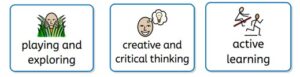
The characteristics of effective learning can be explored in more detail in the Development Matters document.
The Areas of Learning and Development are organised into Prime and Specific areas, with the Prime areas providing the essential building blocks that help children thrive in every other aspect of their learning.
The Three Prime Areas (Essential for foundation):
Communication and Language (CL):
Physical Development (PD):
Personal, Social and Emotional Development (PSED):
The Four Specific Areas (Strengthened through Prime areas):
Literacy:
Mathematics:
Understanding the World:
Expressive Arts and Design:
Beginning with what feels familiar and meaningful to the children, our EYFS curriculum is built around:
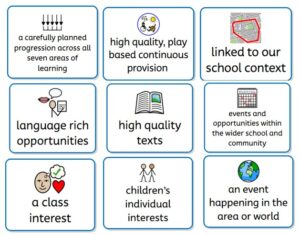
At St Peter’s, we continually refine and adapt our provision and practice so that it meets each child’s learning and developmental needs, supporting them to develop strong foundations across the EYFS, including communication and language, personal, social and emotional development, phonics, writing, mathematical understanding, and physical development. These secure foundations ensure children are well prepared for the transition into Key Stage 1.
We recognise that every child is unique, so learning is shaped around their interests as well as through a carefully planned ‘topic-based’ or themed learning sequences such as such as People Who Help Us, The Rainforest, Weather and Seasons, Under the Sea, or Transport to name a few. These themes give a clear focus for learning and help ensure all areas of the EYFS are covered in an engaging and meaningful way.
These sequences of learning are delivered through quality first direct teaching alongside high-quality provision. In the Early Years at St Peter’s, provision refers to everything in place to support children’s learning and development, including the environment, resources, routines, and staff interactions. Provision happens both indoors and outdoors, which is a key feature of the EYFS because children learn best through play, exploration, and meaningful provision-based experiences across all environments.
Children benefit from dedicated outdoor provision, daily where outdoor challenges offer a learning experience distinct from the indoor environment. The outdoor area encourages children to think, learn and explore physically, supporting the development of gross motor skills, teamwork and larger-scale problem solving.
Through hands-on investigation, exploration and close observation of the natural world, children make meaningful connections with their immediate environment. These outdoor experiences help to build strong foundational skills such as resilience, independence, collaboration and early problem-solving that prepare children effectively for the expectations of Key Stage 1.
In the Early Years at St Peter’s, our indoor and outdoor provision work together to give children a rich and balanced start to school, with a strong emphasis on developing spoken language.
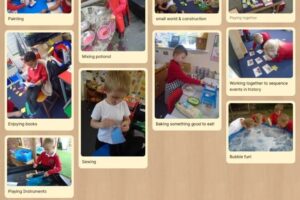
Our outdoor continuous provision area includes a covered area used for mark making, painting, printing, a creative area, large construction, a garden area, mud kitchen, a sand pit, water play, outside stage with dressing up and instruments, a playhouse and trikes and bikes.
Our indoor provision includes a reading corner, challenge areas, junk modelling, small world play and specific foundation stage construction.
Our indoor and outdoor environments are carefully planned to support children’s communication and language development. Through warm, high-quality interactions and shared experiences, children grow into confident communicators, developing skills such as listening, understanding, vocabulary, and expressing their ideas clearly.
We organise our learning spaces so that children can focus on a small number of well-planned activities at a time. This allows adults to model language, extend children’s thinking, and have meaningful conversations with them. We prioritise quality over quantity, creating spaces where children can learn together, talk, and collaborate.
Inside, children take part in a wide range of experiences that promote language, including storytelling, role play, and small world play. Staff introduce new vocabulary, help children build longer sentences, and encourage them to explain their thinking. Activities such as phonics, early writing, and maths investigations all include opportunities to talk, describe, and share ideas. The environment is rich in print, with labels, books, and prompts that help children connect spoken and written language.
Outdoors, children continue to develop their language through active, hands-on experiences. Whether building, exploring nature, or taking part in team challenges, children are encouraged to talk, solve problems, and share ideas. Staff support this by introducing new words and asking questions that extend children’s thinking. The outdoor space provides real-life opportunities for conversation and communication every day.
Reading and writing are part of daily life. Children enjoy a wide range of books and take part in a daily story time, with stories linked to their interests and learning themes.
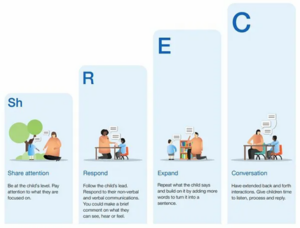
We also place a strong emphasis on independence and oracy. Using approaches such as Voice21 Talk Tactics & the Early Years specific ShREC (Share Attention, Respond, Expand, Conversation), adults encourage children to ask questions, explore ideas, and learn through trial and error. We know that making mistakes is an important part of learning, and we create rich, engaging experiences that spark curiosity and build confidence.
Overall, our approach helps children develop the communication skills, confidence, and independence they need for a successful transition into Key Stage 1.
In EYFS and Key Stage 1, we use the Little Wandle Letters and Sounds Revised programme to teach phonics because it provides a clear, consistent, and carefully sequenced approach to early reading. Children take part in daily phonics sessions using engaging resources and routines that help them learn new sounds, blend them into words, and build strong early reading skills. We choose Little Wandle because it is research informed, fully aligned with the National Curriculum, and ensures every child receives the support they need to become confident, enthusiastic readers from the very start of their school journey.
To support your child with phonics and reading at home, parents can find phonics information here.
We follow the NCETM’s Numberblocks materials to support children’s early understanding of number. We use Numberblocks because it introduces mathematical ideas in a clear, engaging, and highly visual way that helps young children make sense of numbers and how they work. The characters and stories bring maths to life, allowing children to explore concepts such as counting, composition, and number patterns in a way that feels fun and meaningful. By using NCETM Numberblocks, we ensure children build strong number foundations and develop confidence and enjoyment in maths right from the start.
Every day in Wrens Class offers a balance of independent exploration and high‑quality teaching.
A typical day includes:
Children have free access to drinking water, fresh fruit, and our dedicated toileting facilities throughout the day, helping them stay comfortable and ready to learn.
In the first six weeks of school, every child completes the statutory Reception Baseline Assessment. This gives us a clear picture of their early strengths and helps us plan the right support for their learning. We get to know your child really well. Staff observe children every day as they play, learn and interact.
We regularly share what we notice with you, and you’ll be invited to termly 1:1 meetings to talk about how your child is getting on. At the end of the year, we bring everything together in the EYFS Profile, which gives a complete picture of their learning. We have an open door policy, so please feel free to talk to us at any time if you have questions or concerns.
For EYFS children, we invite parents to a themed termly ‘Play and Stay’ session in. This is an opportunity to see what your child does during the day as well as share experiences inside and outside the classroom. We host a parents’ information meeting about the teaching of reading and how we teach phonics in the first few weeks after your child starts school. Each term, Wrens Class joins the whole school to attend St Peter’s Church Services for Harvest, Christmas, Easter and for our Year 6 Leavers’ Service.
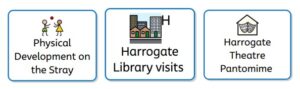
Children will use the Stray for PE in the summer term as well as local seasonal walks to observe the physical features of the season. Every child has the opportunity to visit Harrogate library each term as well as attend the pantomime at Christmas.
In the Early Years, we are committed to ensuring that all children feel included, valued and able to access a broad, balanced and ambitious curriculum. Wherever possible and appropriate, children with SEND learn alongside their peers within the daily routines, continuous provision and adult‑led experiences, supporting a strong sense of belonging and shared learning.
For some children with additional or complex needs, access to learning is carefully considered alongside a personalised or adapted curriculum. This may include targeted support or specialist programmes informed by professional advice, such as speech and language therapy, occupational therapy or the SEN Hub. These interventions are thoughtfully planned and timetabled to minimise disruption to children’s access to the wider EYFS curriculum. Support and adaptations are identified through ILPs or EHCPs and are agreed in close partnership with parents and carers.
Our Early Years environments and teaching approaches support inclusion by focusing on the development of foundational knowledge, skills and learning behaviours across all areas of learning. Adults scaffold learning carefully while maintaining high expectations, ensuring children are supported to make progress through:
Children with higher levels of need may require additional adult support, specialist resources or personalised strategies to fully access learning. This support is carefully planned to enable children to succeed while promoting independence, confidence and positive learning behaviours.
Through our inclusive approach, all children are supported to thrive in the Early Years, developing the communication, social, emotional and learning foundations they need to be successful beyond Reception and into Key Stage 1.
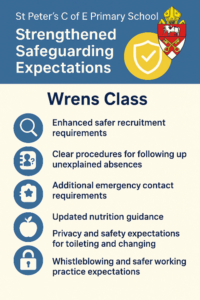
We want every child at St Peter’s to feel safe, cared for and protected. As part of the updated Early Years safeguarding requirements, we follow a number of strengthened procedures designed to keep every child safe throughout the school day.
These include:
These strengthened measures help us maintain a safe, nurturing environment where your child can learn and grow with confidence.
We love welcoming your children into Wrens each day and watching them grow, explore, and shine. Thank you for being part of our journey together, we make Wrens a happy, nurturing place where every child can shine.
If you’d like to arrange a visit to our school, please contact us using the link on our homepage: St Peters C of E Primary School
Read out full statement of intent via the link below.
Early Years Full Statement of Intent
Class Welcome Back Letter September 2026 Wrens
Please follow the following links for the Curriculum Overviews
Curriculum Overview Autumn 2026
Curriculum Overview Summer 2026
Curriculum Overview Spring 2026
Curriculum Overview Autumn 2025
Early Years Homework Expectations
How can I help with my child’s learning?
Practising a couple of these will help your child feel confident across the curriculum.
Phonics Home Learning – Reception Spring 1
Phonics Home Learning – Reception Spring 2
Phonics Home Learning – Reception Autumn