

🌸 Blossom, Buds and Bright Daffodils in Wrens 🌼

Mar
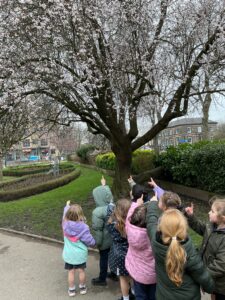
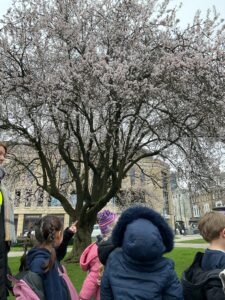
Wrens have been noticing signs of spring over the past few days. They have done some beautiful observational drawings of daffodils found in their learning garden, explored daffodils in their provision and been on a springtime walk too. Blossom, crocuses and, of course, daffodils were all spotted by the children around our local area.
Our Wrens have been talking about the colours, shapes and smells they could see and describing what is happening to plants now the weather is beginning to change. This has been a wonderful way for the children to Love God’s creation, Learn new language and ideas about the world around them, and Shine by sharing their discoveries with their friends.

A word from the Wrens team 🌟

“We have loved watching the Wrens notice the world changing around them. Their curiosity and careful looking have really impressed us – from spotting tiny buds on branches to describing the bright yellow petals on the daffodils. It has been a joy to hear their growing vocabulary and to see them Love, Learn and Shine together this spring.”
Miss Ward and Mrs Renton

Language-rich ideas to try at home 🌱

If you are out and about with your child over the next few weeks, here are some simple, language-rich activities you might enjoy together:
  • Spring spotting walk
    Go for a short walk and see what signs of spring you can find together – blossom, buds, green shoots, birds, worms, puddles, sunshine, rain.
    • Try asking:
      • “What can you see?”
      • “What colours can you spot?”
      • “How do you think this plant feels?” (soft, smooth, rough)
  • Flower talk at the table
    If you have flowers at home (real or artificial), place them on the table and spend a few minutes looking closely.
    • Encourage your child to describe them:
      • “The stem is…” (tall, long, green)
      • “The petals are…” (yellow, white, soft, pointy)
      • “It smells like…” (sweet, fresh)
  • Before and after photos
    Look at the same plant or tree across a few weeks.
    • Take a photo and talk about:
      • “What did it look like before?”
      • “What has changed now?”
      • “What do you think will happen next?”
  • Springtime story chat
    Share a favourite story that includes gardens, parks or seasons.
    • Pause to ask:
      • “Which season do you think this is?”
      • “How do you know it is spring?” (Look for clues: flowers, baby animals, sunshine, rainbows.)
  • Drawing and talking
    Invite your child to draw their own spring picture – it might be a daffodil, a tree with blossom or a garden.
    • While they draw, ask:
      • “Tell me about your picture.”
      • “What is happening to the plants?”
      • “How does this place make you feel?”
These small conversations help your child develop rich vocabulary and confidence when talking, which supports their early reading and writing.

Key spring vocabulary to use with your child 🌷

Here are some useful words you might like to use and model at home as you talk together:
Signs of spring
  • spring
  • season
  • blossom
  • buds
  • shoots
  • grow / growing
  • new life
Parts of a flower/plant
  • stem
  • leaf / leaves
  • petal
  • roots
  • bulb
  • soil
Describing words
  • bright
  • colourful
  • smooth
  • soft
  • delicate
  • tall / short
  • open / closed
Weather and changes
  • sunshine
  • cloudy
  • rain / showers
  • warm / warmer
  • change / changing
You don’t need to teach these as a list – just try to weave them naturally into your chats:
“Look at the tiny buds on that branch.”
“The petals are so delicate.”
“The daffodils are growing taller every day.”

Posted In Curriculum