Jan
28th
💬 From “I Dunno” to “I Think That…” – The Power of Stem Sentences in Every Lesson
At St Peter’s we believe that every child has a voice worth hearing. Our oracy strategy is all about helping children talk, think and explain clearly, so they can Love, Learn and Shine in every part of school life.
One of the simplest but most powerful tools we use for this is stem sentences.
So… what are stem sentences?
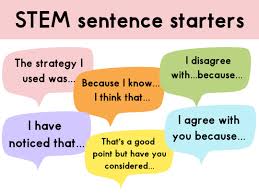
Stem sentences are “starter” sentences that give children a clear structure for what they want to say.
Think of them like a scaffolding or sentence frame that children can complete with their own ideas.
For example:
- “I think this because…”
- “Last lesson we learned… which helps us to understand…”
- “Christians would typically worship in a ______.”
- “If a Muslim follows the Five Pillars, they are likely to…”
These stems:
- Help children speak in full sentences
- Reduce the “I don’t know” panic by giving them a way to start
- Encourage children to reason, explain and justify their ideas
- Support children of all ages and all levels of confidence
As Mrs Robbins, our Curriculum Leader, explains:
“When we give children a stem sentence, we are not giving them the answer – we’re giving them a way in. Suddenly the quiet child, the anxious child, the child who isn’t sure where to start… all have a safe structure they can use to share their thinking.”
Stem sentences in RE: helping children talk about big ideas
In Religious Education and World Views, we use stem sentences to help children talk carefully and respectfully about beliefs. This links directly to our vision for children who Love big questions, Learn through structured, accurate knowledge and Shine in thoughtful conversation.
Some examples you might hear in an RE lesson are:
-
Naming places of worship
- “Christians would typically worship in a ______.”
- “The place of worship for Muslims is called a ______.”
-
Making links between today’s lesson and prior learning
- “Last time we learned about ______. How does that help us understand today’s lesson?”
- “Previously, we explored ______. How does that link to today’s big question?”
-
Exploring key ideas and big questions
- “Today we are learning about the idea of ______ in [faith], which means…”
- “One big question people in [faith] think about is…”
-
Applying learning to real-life questions
- “Christians typically believe Jesus taught about forgiveness, so they might think ______.”
- “If a Jewish person believes in the Ten Commandments, how would that usually affect their choice about ______?”
Used across every subject
Although the RE curriculum makes especially rich use of stem sentences, this approach runs all the way through our curriculum. You might hear children using stem sentences like:
In Maths
- “I know this because…”
- “First I…, then I…, so the answer is…”
- “This method is efficient because…”
In Writing & Reading
- “The author shows this by…”
- “I infer that… because in the text it says…”
- “In my opinion…, however another character might think…”
In Science
- “Our results show that…”
- “We observed that…, which suggests…”
- “We changed the variable…, so we can conclude that…”
In History & Geography
- “In the past, people typically…”
- “This is important because it helps us understand…”
- “One reason for this was…, another reason was…”
Across every subject, stem sentences help children to:
- Organise their thoughts
- Explain their reasoning
- Build strong subject vocabulary
- Speak with confidence in front of others
This is Love · Learn · Shine in action:
- Love – children feel safe to have a go and share ideas
- Learn – children make their thinking clear and build deep understanding
- Shine – children develop the confidence to speak up, present and debate
How stem sentences can be used at home
You don’t need special resources to support this – just a few simple phrases you can use in everyday conversation. Encouraging children to speak in whole sentences at home makes a big difference to their confidence in school.
Here are some easy ways to try this:
1. At the dinner table
Instead of “How was your day?”, try:
- “Today I learned…” – ask your child to finish the sentence.
- “The best part of my day was… because…” – model it and ask them to do the same.
2. When reading together
Use stems such as:
- “I think this character feels… because…”
- “This part is important because…”
- “I predict that… will happen next because…”
3. When solving problems (any little everyday problem!)
- “One possible solution is… because…”
- “I chose to… because…”
4. Talking about RE, values and big questions
- “Some people believe… which means…”
- “If I follow the rule ‘treat others as you want to be treated’, then I would…”
5. Encouraging full sentences
If your child answers with just one word, you might gently say:
“Can you put that into a full sentence for me?”
“Can you start with: ‘I think that…’ or ‘I know this because…’?”
Over time, children begin to use these structures automatically, both at home and in school.
For every child, in every year group
The beauty of stem sentences is that they:
- Work in Early Years, when children are just learning to talk about their play
- Support younger children, who are building basic sentence structure
- Challenge older children, who can use them to explain complex ideas and justify opinions
- Help children with additional needs by providing clear, predictable language patterns
- Stretch high-attaining children to speak with more precision and detail
As Mrs Robbins puts it:
“Whether a child is five or eleven, giving them the language to start their sentence is a powerful act of inclusion. It says: ‘You can do this. Your thinking matters. Here is a way to share it.’”
Posted In Curriculum, Notices